





Search Results
Promotional Clocks
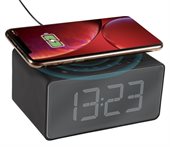
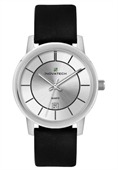
Clocks and timers are used in offices, schools, kitchens, meeting rooms, reception areas and other environments where accurate timekeeping is important. Popular categories include Desk Clocks and Wall Clocks, along with timers and other timekeeping products. Different styles are designed for different applications, ranging from desktop displays and office décor through to countdown timing and scheduling tasks.
Timekeeping products vary considerably in their size, display format and intended use. Desk clocks are designed to sit on workstations, reception counters and shelves, while wall clocks provide visibility across larger spaces. Timers are commonly used where activities need to be measured against a specific duration, such as cooking, education, sporting activities and workplace processes. Products within the category may feature analogue or digital displays, alarm functions, temperature displays and other time-related features depending on the design.
Our Popular Promotional Products in Clocks
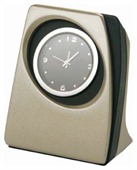
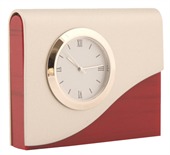
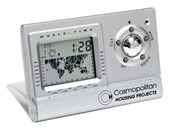
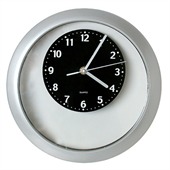
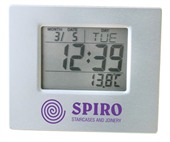
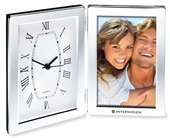
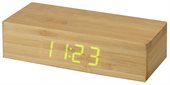
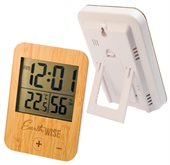
Comparing Clocks & Timers
Although clocks and timers both measure time, they are designed for different purposes. Clocks display the current time continuously and are commonly used in offices, schools, reception areas and public spaces. Timers, by comparison, count down or measure a specific duration and are often used for tasks, activities, presentations, cooking, exercise and workplace processes where a defined time period needs to be monitored.
Different clock styles are suited to different viewing distances and environments. Desk clocks are intended for close-range viewing on workstations and counters, while wall clocks are designed to be visible across larger rooms. Display formats also vary, with analogue clocks using hands and numbered faces, while digital clocks present time numerically. Features such as alarms, countdown functions, temperature displays and date indicators can further influence how a timekeeping product is used in everyday settings.
Wall clocks with large, easy-to-read numerals are generally the most suitable for office environments because they can be viewed from across a room. The ideal size often depends on the viewing distance, room layout and the amount of detail displayed on the clock face.
Digital clocks provide an exact numerical display, making them easier for some people to read quickly. Analogue clocks, however, can make it easier to judge the passage of time and estimate how much time remains before a meeting, appointment or deadline.
Larger rooms generally benefit from clocks with bigger faces and bold numerals that remain visible from a distance. The further away the clock will be viewed, the larger the display typically needs to be for comfortable reading.
Many people use timers to manage tasks, structure work periods and reduce distractions. Techniques such as time blocking and focused work sessions often rely on timers to create clear start and finish points for activities.
Analogue desk clocks are often selected for their traditional appearance, while digital clocks may offer additional features such as alarms, calendars, temperature displays and easier readability. The best option depends on the intended environment and the features required.
Many modern wall clocks use sweep movement mechanisms that eliminate the traditional ticking sound. While no clock is completely silent, these designs are often preferred in offices, meeting rooms, bedrooms and other quiet environments.
Flat batteries are the most frequent cause of wall clock failures, followed by movement wear in older clocks. Environmental factors such as dust, humidity and accidental impacts can also affect long-term performance.
Our product specialist, Catherine, says: "Many people assume all quartz clocks keep time equally well, but the quality of the movement can make a noticeable difference over long periods. Lower-quality movements may gradually gain or lose time and often have shorter operational lives. In my experience, the movement inside the clock is usually a more important indicator of long-term performance than the appearance of the clock itself."
Timekeeping Products For Different Environments
Clocks and timers are used in a wide range of settings, from offices and reception areas through to schools, kitchens, meeting rooms and public spaces. Differences in display type, viewing distance, movement design and functionality can influence which product is most suitable for a particular application. Whether comparing desk clocks, wall clocks or timers, understanding how each style is intended to be used can help narrow the available options. Explore the range to compare timekeeping products, or contact our team if you would like assistance selecting a suitable clock or timer for your requirements.