





Search Results
Die Struck Brass Medallions
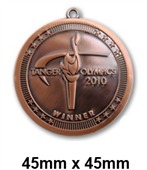
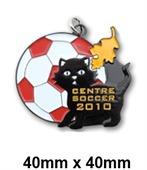
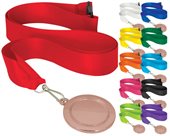
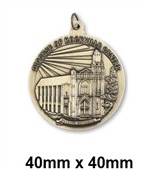
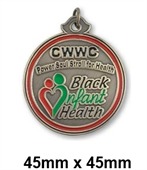
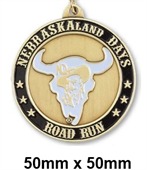
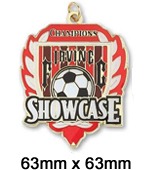
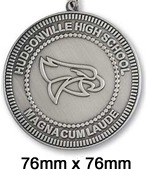
Brass separates this range from iron and zinc alloy medallion options. It takes die striking with a precision that softer base metals do not, holding fine lettering, crest detail, and line work clearly across the face and retaining that detail at the edges. Die cast medallions, where metal pours into a mould rather than a die pressing against it, can reproduce shape but not the same sharpness of relief as die striking delivers. Die striking presses the design into the brass, plating or antique finish covers the surface, and each medallion comes with a loop and jump ring as standard, making the medallion presentation-ready. Sizes run from 40mm to 76mm. The standard specification is a 2D design on one side; double-sided and 3D designs are available as upgrades.
A 3D design on a 63mm brass medallion with gold plating sits in a different register as an award from a flat-struck disc in a lower-grade material. The three-dimensional relief across the face, the weight of the brass, and the brightness of the plating together make a piece that communicates the significance of what it marks in a way the specification alone does not capture.
Smaller sizes suit school sports carnivals, fun runs, and club events. The 63mm and 76mm sizes suit corporate recognition and long-service awards where the weight and presence of a larger medallion is part of what makes the presentation meaningful.
Things to Know
Which finish suits a corporate recognition award? Gold plating suits corporate and formal award contexts where a bright, consistent metallic finish communicates the standing of the occasion. An antique brass finish suits heritage-led contexts including club anniversaries and service recognition programmes where the aged appearance adds to the character of the piece.
Does the upgrade to a 3D design significantly change the medallion? A 3D design introduces depth variation across the relief, with elements at different heights rather than flush at one level, producing a sculptural quality that a flat 2D strike does not achieve. The difference is most visible on larger sizes where the surface area gives the depth variation room to read clearly.
Can an inscription be added to the reverse of a medallion? A reverse design is available as a double-sided upgrade from the standard single-sided specification. The reverse can carry an inscription, year, event name, or secondary element, all struck into the brass at the same quality of relief as the front.
What is the minimum order? The minimum order across all sizes is 50 units per size and finish combination. Larger quantities reduce the unit cost, so understanding the full volume requirement across all size and finish variations before placing the order helps manage cost per unit effectively across the programme.